Organic Modern vs. Traditional Modern: A Side-by-Side Furniture Comparison
The short answer: organic modern furniture is built from natural materials — solid wood, stone, wool, bouclé, and full-grain leather — and shaped by sculptural, biomorphic silhouettes such as curved sofas, oval coffee tables, and rounded armchairs. Traditional modern furniture keeps the geometry of twentieth-century modernism: rectilinear frames, hard edges, symmetrical layouts, and engineered composite, glass, or metal surfaces. Organic modern generally asks for a small amount of scheduled care in exchange for real repairability. Traditional modern generally asks for almost no daily care, but has a lower ceiling for restoration once a surface is damaged. Neither is automatically better; the right answer depends on who uses the room and how much upkeep you will realistically keep up with.
Most shoppers do not set out to choose between two design philosophies. They set out to buy a sofa, a dining table, or a bed frame, and somewhere between the third showroom and the fortieth product page they notice that two pieces with nearly identical proportions can behave completely differently after three years in a real home. That is the point at which "modern" stops being a useful description.
This comparison separates the two aesthetics along the three dimensions that actually decide long-term satisfaction: material sourcing, silhouette philosophy, and maintenance expectations. It closes with a decision framework you can apply room by room, plus guidance on which approach suits households with children, pets, small apartments, and open-plan layouts.
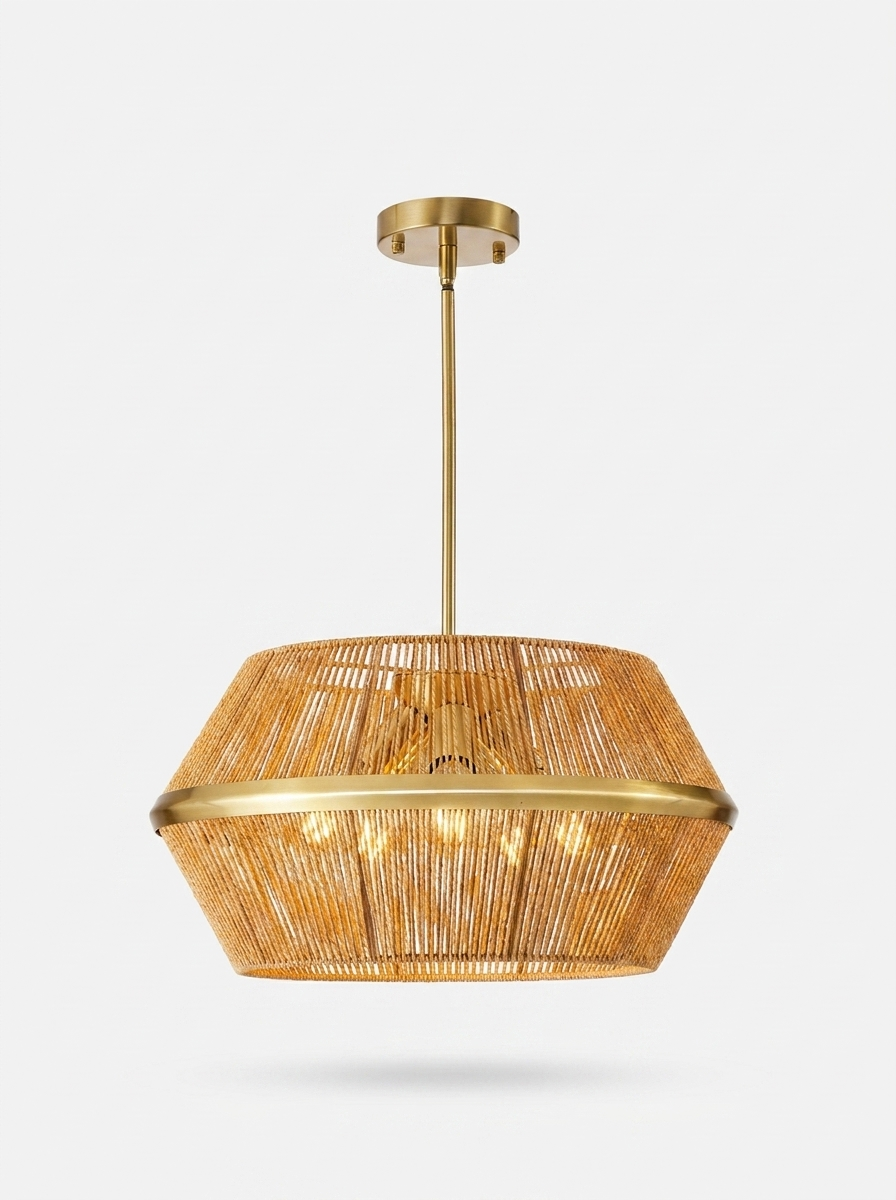
Organic modern leans on natural materials and soft, sculptural geometry — the starting point for this side-by-side comparison with traditional modern.
Why the Choice Is Harder Than It Looks
"Modern" is a marketing category before it is a technical one. A manufacturer can describe a particleboard cabinet with a printed grain wrap and a solid walnut credenza as "modern" in the same sentence, and both statements are defensible. The label describes a look, not a construction method, a material list, or a service life.
Organic modern furniture is best understood as a design language that pairs natural material honesty with soft, sculptural geometry. Typical pieces include a curved or sculptural sofa in a bouclé or wool cover, a walnut coffee table with a travertine or stone top, an armchair with a rounded back and a visible solid-wood frame, an oval or pedestal dining table, and a bed with a curved upholstered headboard or a natural wood frame. The two defining values are the materials and the forms: what the piece is made of, and how its outline moves through the room.
Traditional modern furniture — the geometric branch of modernism that most retailers simply call "modern" — keeps the grid. It inherits mid-century modern's rejection of ornament but holds on to straight lines, symmetrical arrangements, hard edges, and high-contrast surfaces such as glass, chrome, lacquer, and engineered veneer. Where organic modern softens a corner, traditional modern sharpens it.
The practical problem is that showrooms are optimized for the first impression. Lighting flatters a lacquered composite table and a sealed travertine top equally well. What a showroom cannot show you is the year-three question: when a surface is scratched, a seam opens, or a cushion compresses, can the piece be repaired, or does it have to be replaced? Almost every meaningful difference between these two styles lives on the far side of that question.
A second complication is that the two aesthetics are frequently mixed, deliberately and successfully. A rectilinear glass side table beside a curved bouclé sofa is a common styling decision, and it works because the two pieces occupy different visual roles. The goal here is not to push you into one camp, but to help you decide which language should lead a room and which should be the accent.
Where Both Aesthetics Sit in the Wider Furniture Market
Neither style is a niche experiment at this point. The U.S. furniture market was estimated at USD 180.55 billion in 2025, and within the global market, wood is expected to hold a 62.07% share of furniture materials in 2026. The global wooden furniture market is projected to grow from USD 461.84 billion in 2024 to USD 719.61 billion by 2032. Natural-material furniture is the mainstream of the category, not a designer subculture.
The organic and sustainable segment is smaller but expanding. Technavio projects the organic furniture market to reach USD 11.83 billion by 2025 at a compound annual growth rate of 6.27%, while a separate sustainable home decor estimate places the category at USD 4.5 billion in 2024. Definitions differ sharply between these sources — "organic," "sustainable," and "eco-friendly" furniture are not the same measurement — so the figures are best read as directional rather than reconciled.
Within that segment, the sculptural and textural end of the market is expanding visibly. The global bouclé furniture market is estimated at USD 2.69 billion in 2025 and projected to reach USD 3.91 billion by 2031, and the bouclé chair segment alone was valued at USD 1.62 billion in 2022 with an expected USD 2.65 billion by 2030. Consumer research points the same way: 71% of Gen Z buyers reported purchasing from sustainable furniture companies compared with 60% of all U.S. consumers, and U.S. consumers have indicated a willingness to pay roughly a 9.7% premium for certified sustainable furniture.
Read together, these numbers do not prove that organic modern is the better choice for your living room. They show that the material and form decisions in this comparison are being made at scale rather than by a small group of design-led buyers — which matters practically, because it makes replacement parts, upholstery services, and stone refinishing more likely to be available across the years you own the piece.
Material Sourcing: Natural Materials vs. Engineered Composites
What organic modern furniture is typically made from
Solid wood is the structural backbone: walnut and oak appear most often in frames, legs, dining table bases, and bed frames, usually with visible grain and joinery rather than a fully wrapped surface. Stone — travertine and marble — is used for tabletops, coffee table tops, and side tables, and each slab carries its own veining, tone, and surface pitting. Upholstery leans on wool, bouclé, cotton-linen blends, and full-grain leather, chosen for how they feel and how they age rather than for stain resistance alone.
For the buyer, the consequence is repairability. Solid wood can usually be sanded back and re-oiled; stone can be re-sealed; full-grain leather can be conditioned and develops patina instead of degrading uniformly; an upholstered cover can be replaced while the frame stays in service.
The limits are equally real. Natural materials respond to humidity and temperature, so solid wood expands and contracts seasonally. Stone is porous and can be etched by acidic spills. Grain, veining, and hide character vary from unit to unit, so an exact color match between two pieces is not guaranteed. These are characteristics rather than defects, but they change how you should shop: you evaluate a natural-material piece as an individual, not as a repeatable finish.
What traditional modern furniture is typically made from
Engineered construction dominates. The substrate is usually an engineered wood composite finished with veneer, laminate, or lacquer; frames and legs are often metal; tabletops are frequently glass, laminate, or veneer; upholstery is typically a synthetic or blended fabric chosen for durability and cleanability. The design goal is a uniform, repeatable surface with precise edges.
The advantages are practical. Engineered panels are dimensionally stable, hold a flat finish across large surfaces, and tolerate humidity better than solid wood in some applications. Daily cleaning is usually simple, and two units of the same model will look identical out of the box.
The limits appear at the edges and over time. Veneer chipped at a corner or seam usually cannot be sanded back to bare wood; laminate and printed wraps cannot be refinished; a damaged composite panel is normally replaced rather than repaired; lower-density substrates can lose screw-holding strength if a joint is repeatedly stressed.
Fair comparison note: engineered construction is not automatically lower quality. It delivers flat, stable surfaces at sizes and price levels that solid wood rarely matches, and it holds a uniform finish that many buyers specifically want. The honest trade-off is repairability, not craftsmanship by definition.
Silhouette Philosophy: Biomorphic Curves vs. Sharp Geometric Lines
Organic modern: form follows softness
The silhouette vocabulary is biomorphic — curved sofas with rounded arms, sculptural armchairs with enveloping backs, oval and pill-shaped coffee tables, pedestal dining tables with tapered bases, and bed frames with soft-radiused corners. Asymmetry is common, and surfaces are thick and tactile rather than thin and taut.
The practical effects are spatial. A curved sofa naturally arranges seating into a conversation circle instead of a straight row. An oval coffee table removes hard corners from the circulation path between sofa and media unit. A sculptural chair can hold an empty corner on its own, without artwork above it. In small rooms, organic silhouettes often feel less obstructive because there are fewer right angles for the eye to catch on.
The limits are also spatial. A curved back does not sit flush against a flat wall the way a rectangular sofa does, which costs a few inches in narrow rooms. Biomorphic shapes can be harder to align with rigid architectural lines such as paneling or a window grid. And a strongly sculptural piece is a statement by definition — it constrains how much else the room can carry.
Traditional modern: form follows the grid
The silhouette vocabulary is rectilinear: straight sofa backs, square or rectangular table tops, exposed metal legs, hard-edged casegoods, and symmetrical arrangements anchored by a central axis. Glass and chrome introduce reflection and sharpness.
The practical effects are equally concrete. Straight edges align easily with window frames, wall paneling, and built-ins, which makes a room read as intentional with very little styling. A rectangular dining table seats the most people along its perimeter for a given footprint. Reflective surfaces bounce light, which helps in darker rooms.
The limits: hard corners require clearance in high-traffic zones, glass shows smudges and can chip at edges, and rigid symmetry can feel forced in rooms with irregular architecture — an off-center window, a sloped ceiling, or a chimney breast that breaks the wall plane.
Long-Term Maintenance: What Each Style Really Asks of You
The gap between the two styles widens after the first year. In month one, both look excellent. In year five, one of them may need a scheduled intervention and the other may need a replacement part — and which is which depends entirely on the material, not on the aesthetic label.
Organic modern: periodic care, high repair ceiling
- Solid wood: expects occasional oiling or waxing, moves with seasonal humidity, and takes local sanding for dents and blended repairs for scratches. A dented solid wood table top is usually a repair job, not a replacement job.
- Stone (travertine, marble): porous surfaces that benefit from periodic sealing. Acidic spills — citrus, wine, vinegar, some household cleaners — can etch calcium-based stone, so coasters and trivets are part of ownership rather than optional styling.
- Wool and bouclé: wool resists soiling and is resilient under compression, which is why it holds up in high-use seating. Bouclé's looped surface can snag on pet claws and jewelry; a loose loop should be trimmed with scissors, never pulled, because pulling distorts the surrounding weave.
- Full-grain leather: wipes clean, conditions periodically, and develops patina in a way that reads as character rather than damage. Lighter hides can pick up dye transfer from dark denim.
Traditional modern: lighter daily care, lower repair ceiling
- Laminate, lacquer, and glass: wipe-clean and moisture tolerant; the lowest-effort daily maintenance of any common furniture surface.
- Veneer: vulnerable at edges and seams, where chips are difficult to repair invisibly and typically end in a cosmetic patch or a replaced panel.
- Synthetic upholstery: cleans well with mild detergent, but can pill or flatten with heavy use, and compressed foam is rarely restored to original loft.
- Metal and chrome: show fingerprints, water spots, and fine scratches; some plated or coated finishes can flake at contact points over time.
Summed up: organic modern tends to require a small amount of scheduled care while tolerating repair. Traditional modern tends to require almost no scheduled care while offering fewer restoration options when damage occurs. Neither is maintenance-free. The difference is mostly about who performs the work — you, or a furniture repair specialist — and how long the piece can stay in service before it becomes a replacement decision.
Side-by-Side Comparison Table
| Comparison dimension | Organic modern | Traditional modern |
|---|---|---|
| Defining values | Natural material honesty + sculptural form | Geometric precision + visual contrast |
| Typical structural material | Solid wood (walnut, oak) | Engineered wood composite with veneer or laminate |
| Tabletop options | Travertine, marble, solid wood | Glass, veneer, laminate, lacquer |
| Upholstery | Wool, bouclé, linen blends, full-grain leather | Synthetic and blended fabrics |
| Silhouette | Curved, biomorphic, often asymmetrical | Rectilinear, symmetrical, hard-edged |
| Edge profile | Radiused and softened | Sharp and defined |
| Surface texture | Tactile, matte, visible grain and veining | Smooth, reflective, uniform |
| Palette tendency | Muted, earthy, tonal | High contrast, graphic, neutral plus metal |
| Daily cleaning effort | Moderate; stone and wool need attention | Low; wipe-clean surfaces |
| Repairability | Higher — sanding, re-oiling, re-sealing, re-upholstery | Lower — cosmetic edge repair or panel replacement |
| Refinishable | Often yes (solid wood, stone) | Rarely (laminate, veneer, lacquer) |
| Typical wear point | Surface patina, stone etching, fabric snags | Chipped veneer, lifted laminate edge, compressed foam |
| Best suited to | Buyers who accept light upkeep in exchange for repairability and a calmer room | Buyers who want minimal upkeep and a sharper, more graphic room |
| Main constraint | Humidity sensitivity; unit-to-unit natural variation | Limited restoration options after damage |
Step-by-Step: A Decision Framework for Undecided Buyers
Work through these seven steps in order. Most buyers find that two or three of them settle the decision before they reach the end.
- Audit how the room is actually used. Count children, pets, and how often guests sit on the furniture. A living room used daily by a large dog and two toddlers has different material priorities than a formal dining room used three times a year.
- Measure the architecture before the furniture. Note ceiling height, how much wall-flush placement you need, and the width of circulation paths. Curved backs cost inches against a wall; hard corners cost inches in a walkway.
- Choose the material story first, silhouette second. Decide whether you want solid wood, stone, wool, and full-grain leather in the room, or engineered, glass, and metal surfaces. Silhouette is the easier decision once the materials are settled, because the material list determines upkeep.
- Set a realistic maintenance tolerance. If you will not re-seal a stone top or trim bouclé loops, that is useful information — choose accordingly rather than planning to change your habits.
- Pick one dominant language and one contrast piece. Lead with organic modern and add a single rectilinear glass or metal accent, or lead with traditional modern and add one curved upholstered piece. More than two competing languages usually reads as an unfinished room.
- Verify construction and compliance before ordering. Ask what structural standard the piece is tested against rather than only what it looks like. Domestic seating in the European market is commonly specified against EN 12520:2024, which covers safety, strength, and durability, while domestic tables are covered by EN 12521:2023. Buyers shipping into California should also expect California Proposition 65 warnings for furniture containing listed chemicals such as formaldehyde and certain flame retardants. These requirements apply to organic modern and traditional modern furniture alike — a natural-material look is not a compliance statement.
- Plan the lifecycle before you buy. Ask how the cover is replaced, whether the surface can be refinished, and which component is expected to fail first. A piece with a replaceable cover and a refinishable top has a longer service life than one with neither.
Use Cases: Matching Each Aesthetic to a Real Household
Households with young children and pets
Durability here depends on the specific material more than the style label. Solid wood dents rather than shatters and can usually be locally sanded. Full-grain leather wipes clean and absorbs light scratches as patina. Looped textiles such as bouclé are the most vulnerable surface around pets, because claws can pull loops, while tighter weaves and leather are more forgiving. Radiused edges reduce sharp impact points in circulation areas, which is one concrete advantage of organic modern silhouettes in a family room. Engineered surfaces resist daily moisture well, but chips at edges rarely disappear, and a busy household is exactly the environment where edges get hit.
Small apartments and light-limited rooms
Traditional modern usually wins on brightness: glass and polished metal reflect light and make a compact room read sharper. Organic modern wins on visual clearance: an oval coffee table and a curved sofa leave no hard corners in the walking path, so a small living room often feels less blocked even when the footprint is identical. If the apartment has irregular architecture — an off-center window or a shallow alcove — curved silhouettes are generally more forgiving than a rigid symmetrical grid.
Open-plan living rooms that need one focal point
Open plans weaken the visual boundary between kitchen, dining, and lounge, so they benefit from a single strong anchor. Organic modern supplies that anchor naturally: one sculptural sofa, curved armchair, or travertine-topped coffee table can define the lounge zone without walls. A traditional modern scheme needs a different anchor strategy — usually a symmetrical arrangement or a reflective surface that reads as deliberate against the surrounding open space.
Dining rooms used for regular hosting
A rectangular table generally seats the most people along its perimeter for a given footprint, which favors traditional modern layouts for larger, regularly seated groups. An oval or pedestal dining table softens circulation around the room and removes corners in tighter dining areas, at the cost of some perimeter seating efficiency. In natural-material dining rooms, a solid wood or stone top is the surface most exposed to heat, spills, and acidic food, so sealing, trivets, and coasters are functional requirements rather than styling choices.
Bedrooms
Bedrooms tolerate more visual softness than any other room, which is why organic modern bed frames — curved upholstered headboards, natural wood frames, rounded corners — fit so easily there. The decision rule is simple: if the bedroom is already visually busy, choose the quieter frame and let textiles carry the texture. If it is minimal to the point of feeling cold, a sculptural headboard and a warm wood tone will do more than any accessory.
Frequently Asked Questions
What organic modern living room furniture is recommended for long-term use?
Prioritize pieces whose materials can be repaired rather than replaced. In practice that means a sofa with a solid wood frame and a replaceable cover in wool, bouclé, or full-grain leather; a coffee table with a solid wood base and a stone top that can be re-sealed; a sculptural armchair with a rounded back and a removable cushion; and an oval or pedestal side table that keeps circulation clear. Sculptural silhouettes tend to date slowly because they are not tied to a short trend cycle, and natural surfaces age visibly — which is either the appeal or the problem, depending on your tolerance. Before comparing colorways, check joint construction, whether the cover is replaceable, and whether the surface can be refinished.
Is organic modern furniture durable enough for homes with kids and pets?
Durability depends on the material, not the style. Solid wood can be sanded locally when dented; full-grain leather wipes clean and takes light scratches as patina; engineered veneer resists daily moisture but chips at edges and normally cannot be refinished. Looped upholstery such as bouclé is the most exposed surface in a pet household because claws pull loops, while tighter weaves and leather are more forgiving. Curved, radiused edges reduce sharp impact points in walkways, which is a practical advantage of organic modern forms in family rooms. The honest constraint is maintenance: natural materials reward buyers who keep up with sealing, conditioning, and occasional touch-ups.
What should buyers verify before ordering either style?
Ask for the structural standard the piece is tested against, not just the finish. Domestic seating in the European market is commonly specified against EN 12520:2024, which covers safety, strength, and durability requirements, while domestic tables are covered by EN 12521:2023. Buyers shipping into California should also expect California Proposition 65 warnings for furniture containing listed chemicals such as formaldehyde and certain flame retardants. These requirements apply to organic modern and traditional modern furniture alike; a natural-material look does not by itself confirm compliance, and neither does a geometric one.
Does traditional modern furniture require less maintenance than organic modern?
Usually less routine maintenance, but not necessarily a lower long-term cost. Laminate, lacquer, glass, and many synthetic upholstery finishes wipe clean and tolerate moisture, so day-to-day care is genuinely simpler. The trade-off appears later: chipped veneer and lifted laminate edges are typically cosmetic repairs or panel replacements rather than refinishing jobs. Solid wood can be re-oiled and re-sanded, stone can be re-sealed, and upholstered covers can be replaced while the frame stays in service — so organic modern pieces often remain usable longer even though they ask for more attention along the way.
Can you mix organic modern and traditional modern pieces in one room?
Yes, and many well-resolved rooms do exactly that. The usual approach is to pick one dominant material story and let the other style appear as a small number of contrast pieces — a rectilinear glass or metal side table beside a curved bouclé sofa, or a geometric shelving unit against a walnut dining table. Keep the palette consistent across both languages, and limit the number of hard-edged, high-contrast pieces so the room does not read as two separate schemes. If you would like to see how specific pieces sit together before committing, the SKOVN team can walk you through the collection, arrange a sample, or prepare a quote for a particular room layout.
Conclusion: Let the Household Decide, Not the Label
Organic modern and traditional modern are not competing quality levels; they are two different answers to the same brief. Organic modern answers with natural materials — solid wood, stone, wool, bouclé, and full-grain leather — and with biomorphic silhouettes that soften circulation and arrange seating around conversation. Traditional modern answers with engineered, glass, and metal surfaces, rectilinear geometry, and symmetry that aligns easily with architectural lines.
The decision usually resolves into three questions. How much scheduled care will you actually perform — sealing stone, oiling wood, trimming fabric loops? How much does repairability matter versus low daily effort? And does the room need softness, or does it need a sharper graphic edge? Households with children and pets, small apartments, open-plan living areas, dining rooms, and bedrooms each weigh those questions differently, which is why the comparison table above is worth returning to room by room rather than applying one answer to an entire home.
Both aesthetics can coexist. Choose one to lead, let the other appear as an accent, and verify construction and compliance before the order is placed rather than after delivery.
Comparing these two directions for a specific room?
SKOVN is an organic modern furniture brand serving American homes, focused on natural materials and sculptural forms. If you are deciding between an organic modern scheme and a more geometric one, our team can help you compare pieces side by side, arrange a sample, or prepare a quote for a specific room layout and seating requirement. Tell us the room, the dimensions, and how the space is used, and we will come back with a workable configuration rather than a catalog list.
Have Questions or Need More Details?
Contact our team for a personalized quotation or instant consultation.
Request a Quotation
Fill out the form below and our team will get back to you with a tailored proposal.
WhatsApp Direct Chat
Prefer to chat in real-time? Message us on WhatsApp for instant assistance & quick answers.
- Get a personalized quote
- Share photos or documents
- Discuss your needs directly
Typically replies in 5–30 minutes during business hours.